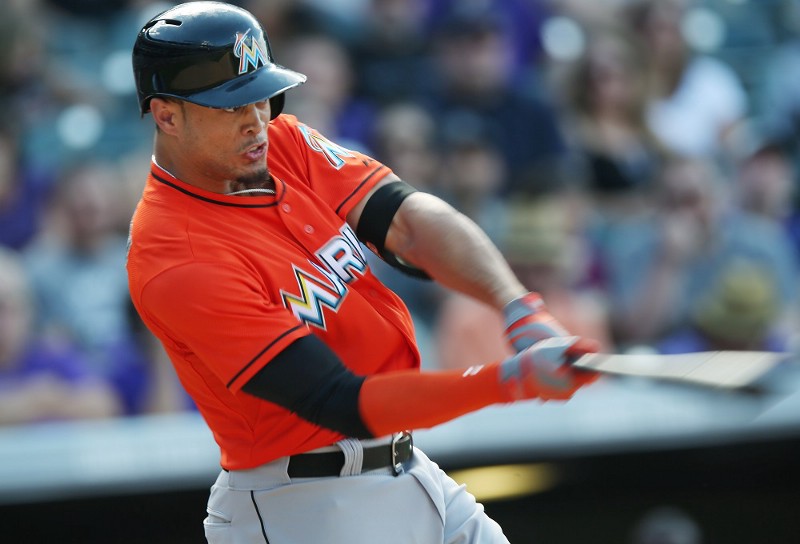
When the 2015 Major League Baseball season opens next week, the average player on a Major League roster will make more than $4 million in salary, according to an Associated Press compilation of salary and bonus data. The figures aren’t exact — and they’re skewed by rather large contracts going to some of the game’s top players — but the $4.25 million estimated average salary will be a record for Major League players.
And, despite common protestations, they should be making even more.
That might sound absurd, but baseball’s revenues have popped in recent years thanks to friendly television deals at both the regional (for example: the Dodgers’ 25-year local deal worth north of $6 billion) and national (MLB’s new TV package is worth more than $12 billion) levels. If the $4.25 million figure is right, that means salaries have risen by roughly $800,000 in the last two years alone, so baseball players have shared in the wealth somewhat. But they haven’t shared as equally as owners, because over the long-term salary growth continues to lag behind baseball’s overall TV-inflated revenue growth. In fact, even with what the AP calls an “eye-popping” average salary, baseball players’ share of revenues dropped below 40 percent in recent years, the lowest of any of the four major sports leagues, as FanGraphs’ Nathaniel Grow calculated himself this week.
This is not a new trend in baseball: salaries have declined as a share of revenue fairly consistently, and precipitously, since they registered around 55 percent in the earliest part of this century.
You’d be forgiven for not thinking of this as the biggest problem in the world. The minimum salary in baseball is still $500,000. But as each year passes, it could have bigger and bigger implications as baseball approaches the end of its collective bargaining agreement in 2016. Baseball has had an unprecedented period of labor peace since the 1994–95 strike canceled the World Series and the following spring training, and at least for now, they’re talking as if they’re happy with the overall health of the sport. But players watching revenues continue to outpace salary growth could, as Grow notes, pose an issue in upcoming labor negotiations.
Beyond that, the issues facing ballplayers is indicative of a larger trend in the broader economy (albeit on a much different wage scale), where stagnating wages have left workers taking home a smaller share of corporate revenues even as productivity and profits continue to increase.
It’s also indicative of a much more pressing issue in baseball itself, where minor leaguers are lucky enough to play baseball for living without making much of a living playing baseball. Multiple former minor leaguers sued MLB and Minor League Baseball last year, alleging that they were paid less than federal and state minimum wages and were subject to other violations of labor and wage laws. The suit claims, for instance, that players receive stipends for spring training but aren’t actually paid during the mandatory practice time, while at the lowest levels their in-season pay can amount to less than $7,500 per season.
Unlike the Major Leaguers, minor league players don’t have a union to bargain with their employers (they don’t become members of the MLBPA until they land on an active Major League roster). And even though they can turn to the courts to ask for help, that’s not a guarantee: MLB has argued that the players are seasonal workers who aren’t subject to wage and hour regulations, and just in case that doesn’t work, MLB officials have set their sights on Congress to lobby for an exemption to federal and state minimum wage laws.
Workers throughout baseball have faced similar problems. Multiple clubs — and the San Francisco Giants twice — have faced sanctions from the Department of Labor for violating wage and overtime laws for front office and clubhouse employees, so much so that in his former role as MLB’s chief operating officer, new commissioner Rob Manfred wrote a memo to clubs declaring that wage theft was “endemic to our industry.”
Major League players should be enjoying an even larger share of the revenues they are largely responsible for producing. It’s even more important, though, that the players and workers at the bottom of the game’s totem pole earn their due share too. And for a sport that openly brags about the financial “golden era” it is in these days, there’s no excuse for Major League Baseball to not do better for everyone who actually makes it work.