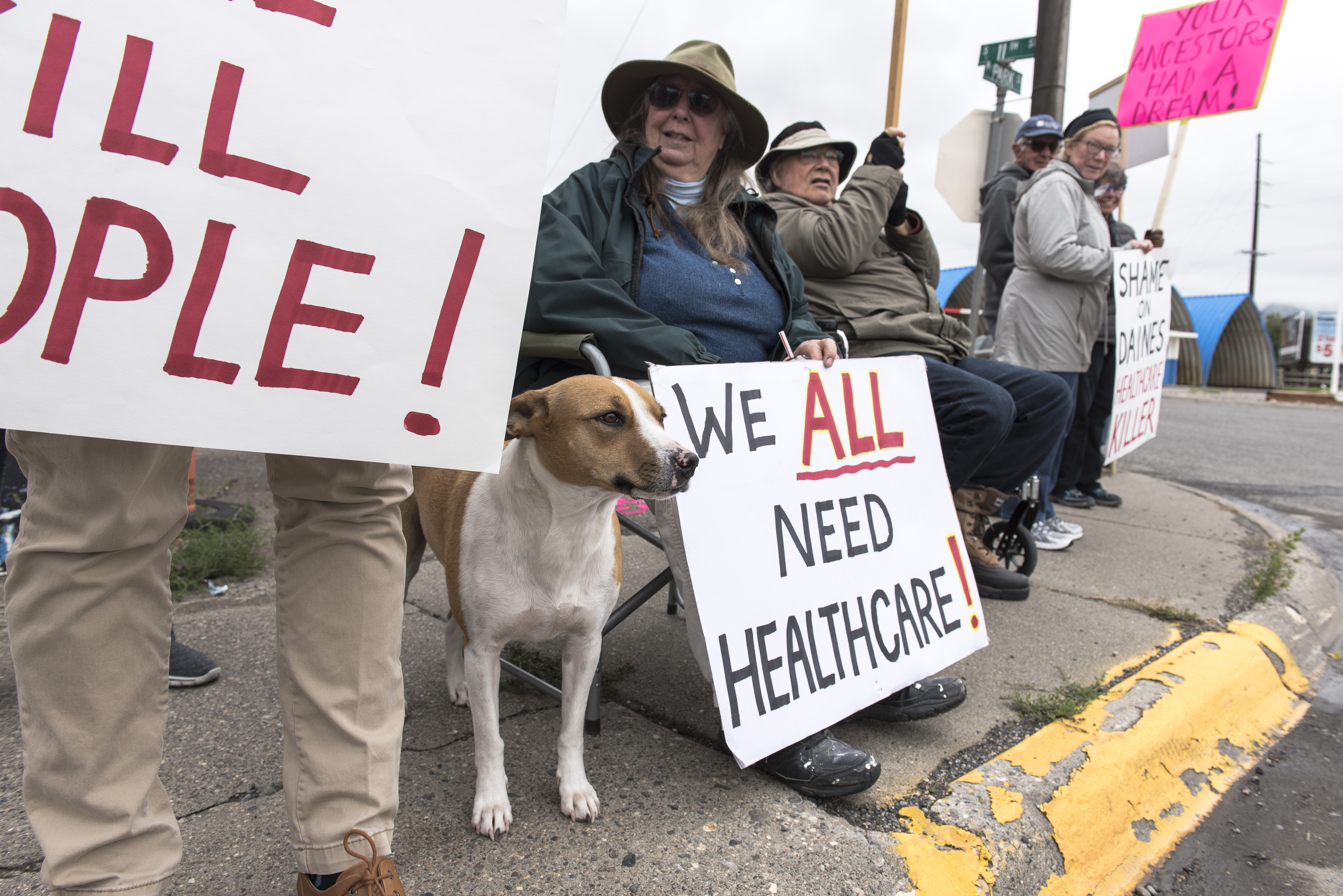
More U.S adults are without insurance now than before President Donald Trump took office. The uninsured rate was 12.2 percent at the end of 2017, up 1.3 percentage points from the record low of 10.9 percent at the end of 2016, or the end of President Barack Obama’s final term in office, according to a Gallup and Sharecare national survey released Tuesday.

According to Gallup, the 1.3 point increase is an estimated 3.2 million Americans who became uninsured in 2017. Young, Black, Latinx, and low-income residents saw the largest increases in the uninsured rate; Black and Latinx residents saw the biggest shift, with 2.3 and 2.2 point increases respectively. This isn’t too surprising because people of color saw greater gains in coverage than white residents under the Affordable Care Act (ACA) — although they’re still more likely to be uninsured.
This seemingly modest increase is the largest single-year increase Gallup and Sharecare have documented since it started in 2008. The drop is significant, but the uninsured rate is still well below the peak of 18 percent in 2013, which was just before the ACA marketplace and individual mandate, or the tax penalty for having insurance, went into effect.
Gallup says several factors relating to the ACA, or Obamacare, marketplace contributed to the increased number of uninsured. Rising insurance premiums on the marketplace factored into the uptick in uninsured. While minimal insurer participation helps drive expensive insurance — and was a problem during the Obama administration — premiums significantly increased when Trump ended critical payments to insurance companies.
As the Kaiser Family Foundation’s Larry Levitt noted on Twitter, Gallup’s confidence level is plus or minus one percentage point. He added, a recent Centers for Disease Control and Prevention survey shows 200,000 more people were uninsured within the first six months of 2017 compared to 2016. (This isn’t the same period of time Gallup measured and released Tuesday.)
Even so, the new Gallup’s 2017 data is just the beginning. The Republican tax bill repealed the individual mandate, and the Congressional Budget Office projects 4 million more people will be without insurance in 2019, and 13 million in 2027. Other groups are already urging Congress to repeal the employer mandate, or the requirement that employers with 50 or more full time employees provide affordable health insurance.
Additionally, some states are pursuing drastic changes to the Medicaid program, which provides affordable insurance to low-income adults, and this will likely prompt people to drop the public insurance. Kentucky was the first state to upend its program, and state officials say 95,000 people will move off Medicaid. They say they’ll transition to private insurance, but that remains to be seen.
UPDATE: This post has been updated to include Larry Levitt’s point on the Gallup data. It has also been updated to attribute data to Gallup and Sharecare.